


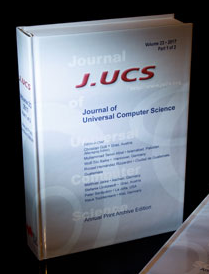
Our colleagues Moisés Rodríguez and Mario Piattini, in collaboration with Gema Gutierrez and Javier Garzás from Rey Juan Carlos University, have published the article OKR4DQ: A Case Study for Improving Data Quality with Objectives and Key Results in volume 32(6) of the journal The Journal of Universal Computer Science (J.UCS).
As organisations move forward with their digital transformation initiatives, the strategic importance of data quality becomes paramount. Legal and security considerations, together with the economic value of data, further highlight the need for high-quality, reliable and trustworthy datasets. In particular, the effectiveness of artificial intelligence techniques depends largely on the integrity of the underlying data. However, organisations often lack structured methods for assessing and improving data quality in line with business objectives.
This article addresses this shortcoming by introducing OKR4DQ, a methodology that utilises Objectives and Key Results (OKRs) to systematically improve data quality. The approach combines quality assessments based on the ISO/IEC 25012 standard with the definition and implementation of OKRs focused on specific quality characteristics requiring improvement. In addition to the comprehensive methodology, its application is demonstrated in a real-world case study, showing quantifiable improvements in data quality and offering practical insights into the challenges and benefits of aligning data quality initiatives with business performance objectives.
 +34 676 97 57 83


