


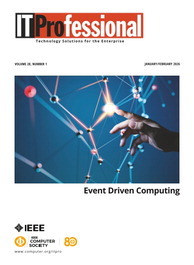
Our colleagues Jesús Oviedo, Moisés Rodríguez and Mario Piattini, in collaboration with Marcos Kalinowski and his team at Pontificia Universidad Católica de Río de Janeiro (PUC-Rio), have published the article Practical Insights Into AI System Product in the IT Professional magazine.
Artificial intelligence systems, like all other software systems, must behave as expected by the user in order to generate trust in them. For this reason, it is necessary to ensure the functional adequacy of artificial intelligence systems.
This article presents a case study in which an AI system developed to analyse images of oil rig decks was evaluated using the Functional Suitability assessment environment for AI systems based on the ISO/IEC 25059 and ISO/IEC 25040 standards, which was developed by our colleagues. In addition, the article focuses on analysing how to evaluate the Functional Correctness sub-characteristic, given the particularities of this sub-characteristic in AI systems compared to traditional software systems.
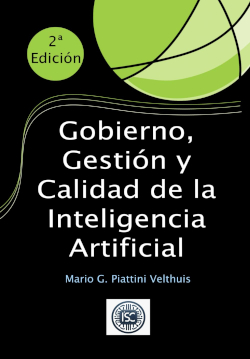
AQCLab's scientific director, Mario Piattini, has published the second edition of the book Gobierno, Gestión y Calidad de la Inteligencia Artificial, available on Amazon and sponsored by I2SC, a company specialising in the evaluation and certification of AI-related standards in various fields: management, government, process quality, product quality, data quality, and with which AQCLab collaborates as the first and only accredited laboratory for the evaluation of data quality in AI systems.
This work offers an overview of the main standards and techniques for governing, managing and ensuring the quality of intelligent systems. Based on the best practices compiled in this work, organisations will be able to face the challenges posed by AI, developing and deploying their own AI governance, quality and management systems, in accordance with the most appropriate rights, ethical principles and engineering fundamentals.
This new version has been almost entirely updated and is nearly twice as long as the first edition, incorporating the large number of norms and standards that have emerged rapidly since the publication of the first edition.
Our colleagues Rubén Márquez, Moisés Rodriguez, Javier Verdugo and Mario Piattini, in collaboration with Francisco Pascual Romero from UCLM, have published the article An Artificial Intelligence maturity assessment framework based on international standards in the Volume 159, Part B of the Engineering Applications of Artificial Intelligence journal.
The article presents MMSIA, an AI maturity assessment framework designed taking the ISO/IEC 33000 family of standards as a basis for process assessment and ISO/IEC 5338 as the process reference model. This framework aims to provide AI system developers with a structured tool for the continuous improvement of their development lifecycle processes, thereby enhancing the reliability and effectiveness of AI applications.
In addition to presenting the maturity assessment framework, and to demonstrate its applicability, the article also presents the results of its validation through a case study in the automotive sector.
Our colleagues Rubén Marquez and Moisés Rodríguez presented AQCLab's advances in the evaluation of AI and quantum software at JISBD 2025 through the papers "MMSIA: Modelo de Madurez organizacional para los procesos Software de Inteligencia Artificial" and "Validación empírica preliminar de un modelo de analizabilidad para software híbrido".
The JISBD 2025 conference, XXIX Conference on Software Engineering and Databases, took place in Córdoba between 9 and 11 September as part of the Sistedes Conference with the aim of being a reference forum for researchers from Spain, Portugal and Latin America in the areas of Software Engineering and Databases.
"MMSIA: Modelo de Madurez organizacional para los procesos Software de Inteligencia Artificial", carried out by AQCLab colleagues Rubén Márquez, Javier Verdugo, Moisés Rodríguez and Mario Piattini, presents the new MMSIA maturity model that will enable organisations to evaluate, improve and certify the quality of the development processes of companies that build AI systems.
The paper "Validación empírica preliminar de un modelo de analizabilidad para software híbrido", by Ana Díaz-Muñoz, José Antionio Cruz-Lemus, Moisés Rodríguez, Teresa Baldassarre, and Mario Piattini, presents a preliminary validation of a software quality model focused on the analysability of hybrid systems that integrate classical and quantum components.
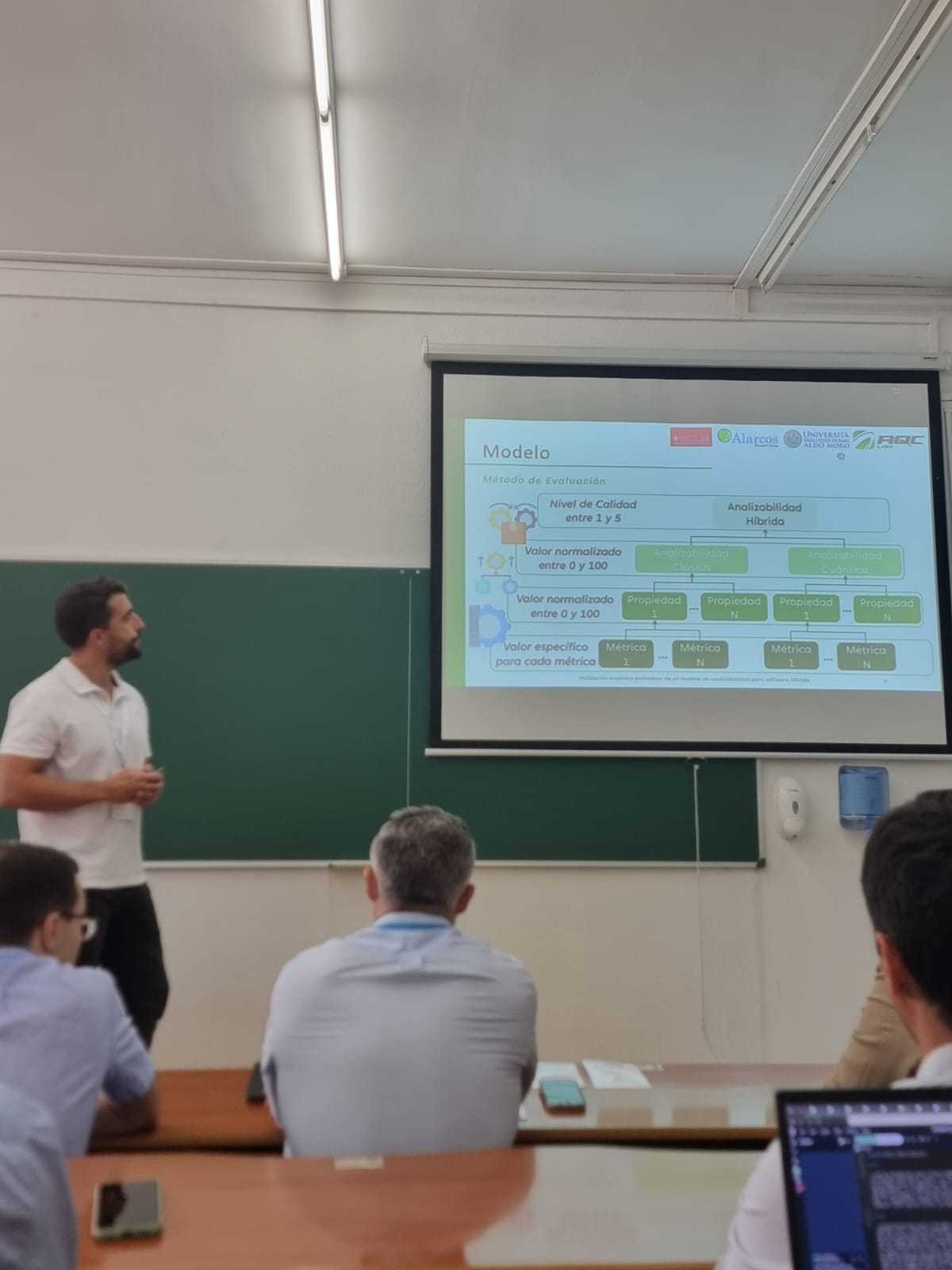
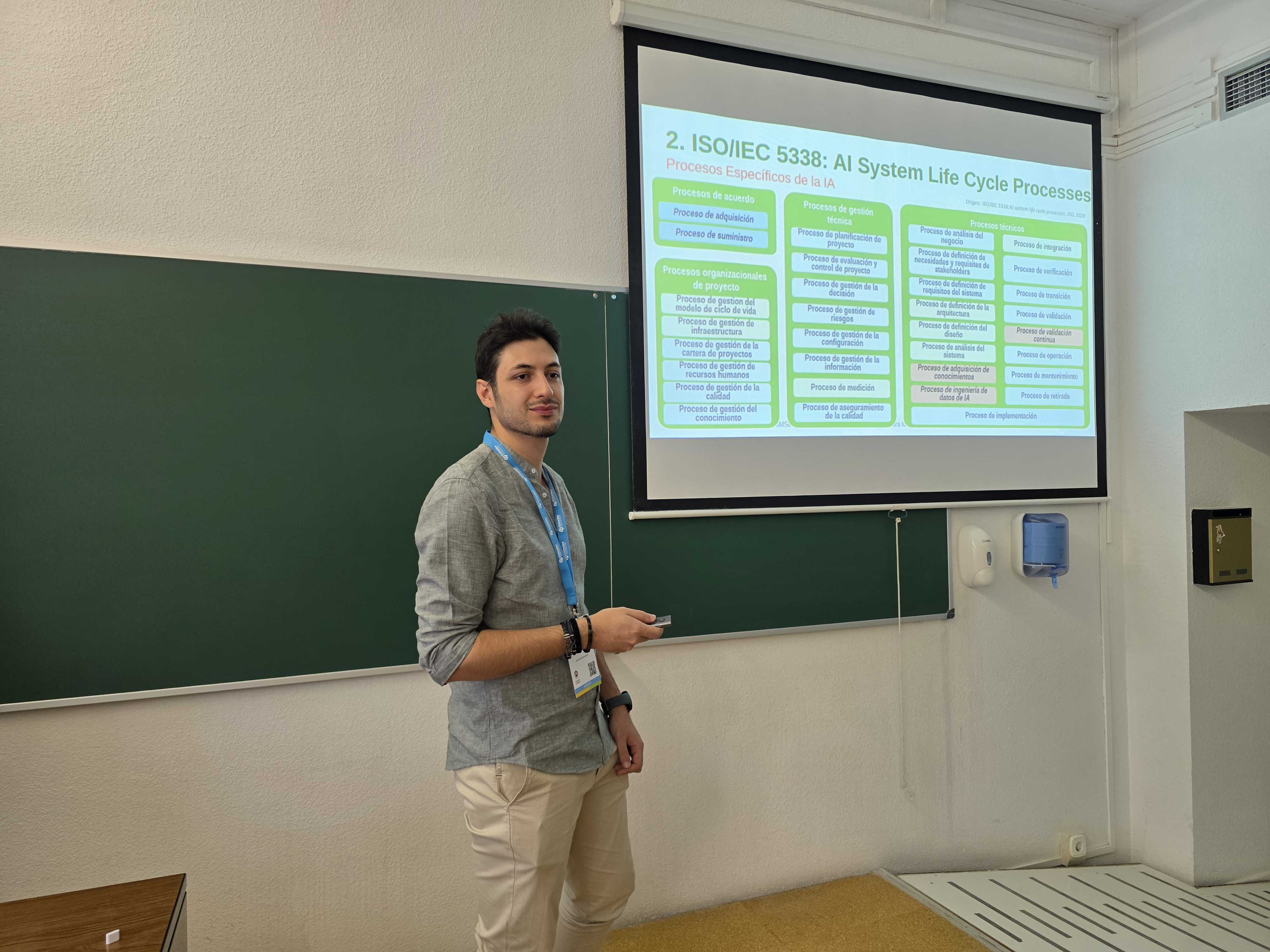

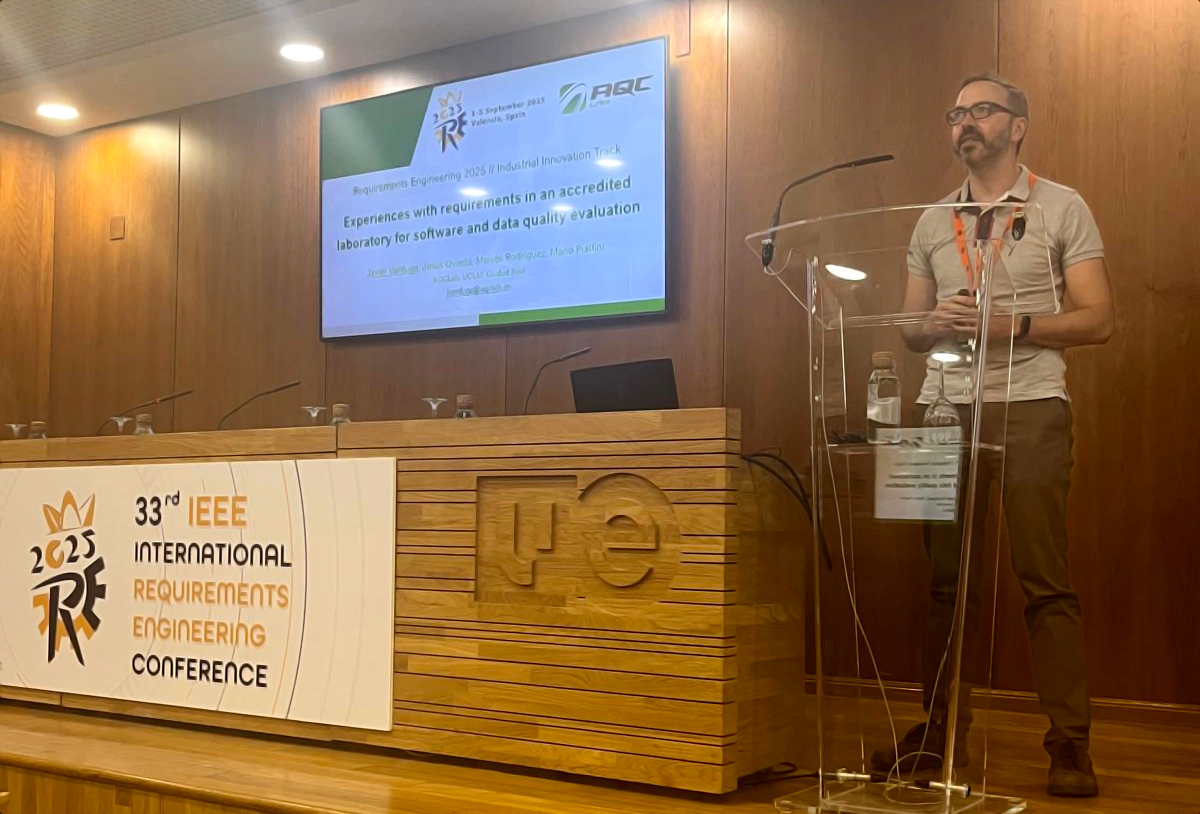
Our colleague Javier Verdugo presented the article "Experiences with requirements in an accredited laboratory for software and data quality evaluation" in the Industrial Innovation track of the IEEE International Requirements Engineering 2025 conference. RE 2025 took place in Valencia between 1 and 5 September.
IEEE International Requirements Engineering is the premier requirements engineering conference, where researchers, practitioners, students and educators meet, present and discuss the most recent innovations, trends, experiences and issues in the field of requirements engineering.
In the article, written together with his colleagues from AQCLab, Jesús Oviedo, Moisés Rodríguez and Mario Piattini, they present AQCLab's experiences over more than 15 years on the role of requirements in the software and data quality evaluation services they provide as an accredited laboratory.
 +34 676 97 57 83


