


Our colleagues Ana Díaz, Jesús Oviedo, Javier Verdugo and Moisés Rodríguez, in collaboration with José Antonio Cruz Lemus from Universidad de Castilla-La Mancha, have published the article SonarQiskit: Extending SonarQube for quantum code quality analysis in volume 35 of the journal SoftwareX.
Hybrid classical-quantum systems require tools capable of evaluating the quality of software that integrates quantum circuits into conventional applications. This work presents SonarQiskit, a SonarQube plugin that detects Qiskit circuits in Python projects and automatically computes quantum metrics focused on analyzability, integrating them into the analysis dashboard alongside traditional maintainability indicators. The tool has been applied in real world environments, enabling the monitoring of quantum related quality in CI/CD pipelines and facilitating the analyzability and maintainability of hybrid software systems.

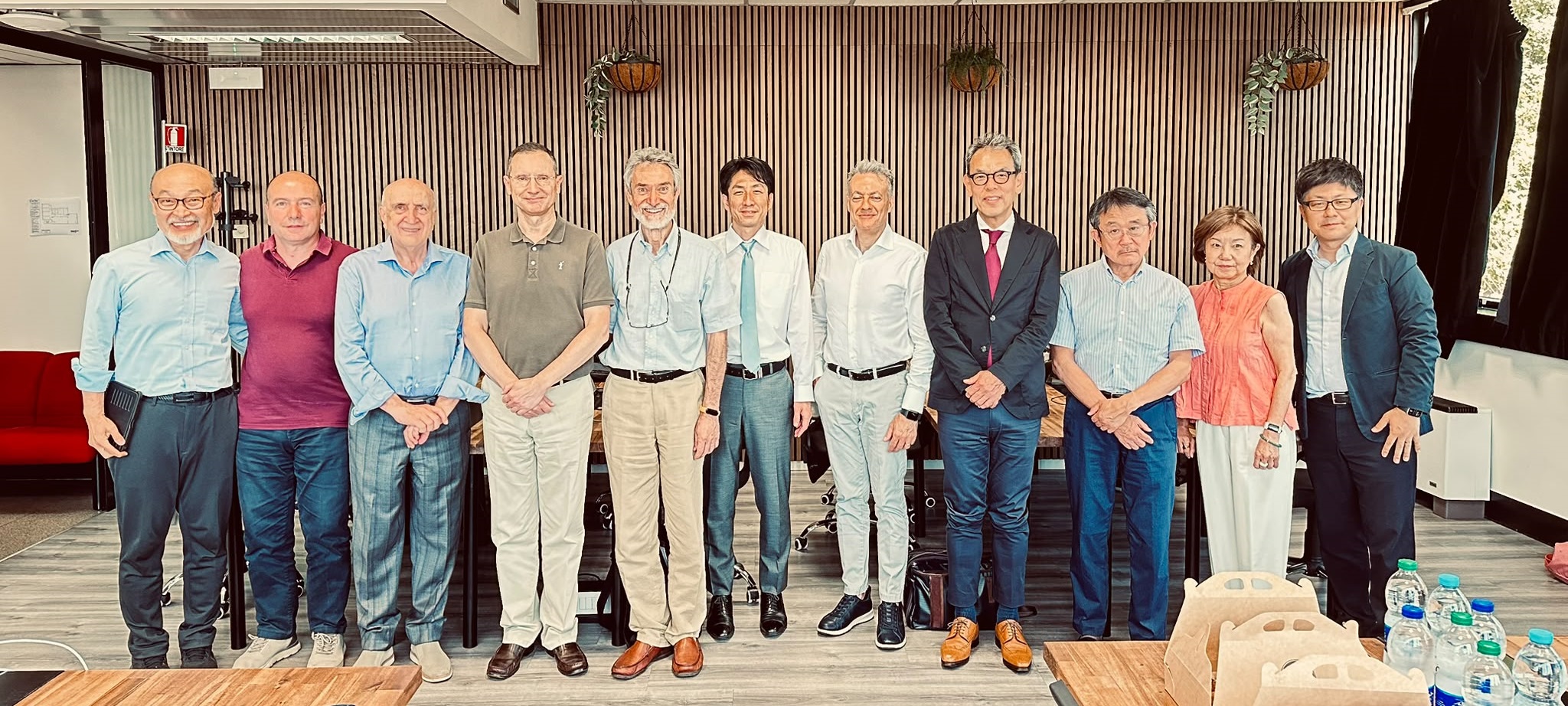
Our scientific director Mario Piattini, chair of UNE’s SC7, participated as the Spanish delegate at the meeting of Working Group WG6 (Software Product and System Quality) of ISO/IEC JTC1’s SC7 (Software and Systems Engineering), held in Rome from 31 May to 5 June 2026.
At this meeting of ISO/IEC JTC1/SC7 WG6, software quality experts from over 20 countries discussed updates and new standards within the ISO/IEC 25000family, covering both data and software as well as services, which AQCLab utilises as the sole ENAC-accredited laboratory for the assessment of these types of products.

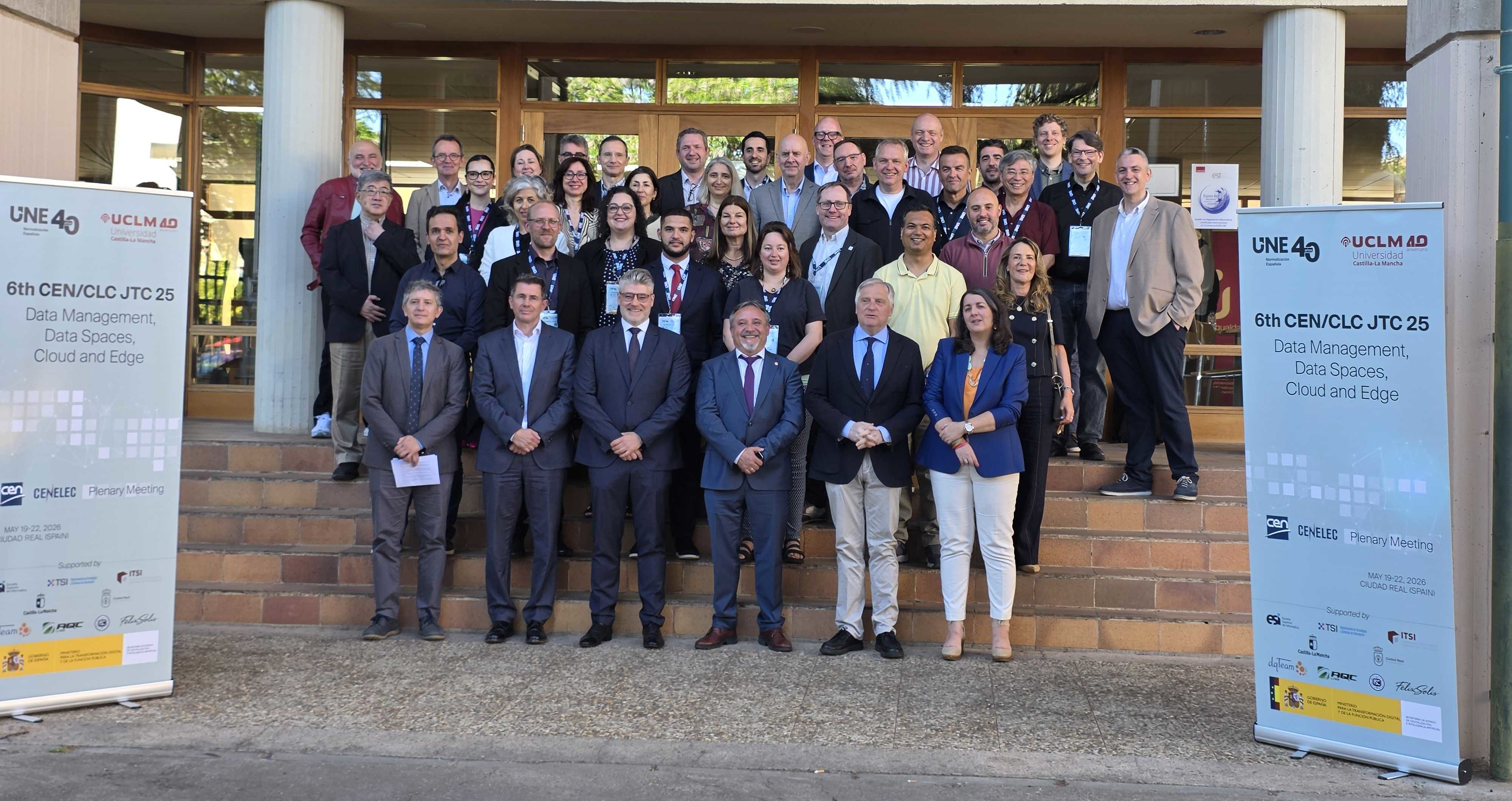
Our Director, Moisés Rodríguez, attended the sixth plenary meeting of the CEN/CLC JTC 25 committee on “Data Management, Data Spaces, Cloud and Edge”, in which AQCLab participated as a sponsor. The plenary meeting, organised by the Alarcos Group, UNE and JCCM, took place at the Escuela Superior de Informática in Ciudad Real between 19 and 22 May 2026.
To strengthen digital sovereignty and competitiveness in Europe, CEN and CENELEC have established the CEN/CLC JTC 25 committee, responsible for defining regulatory standards for data management and cloud and edge computing, helping to consolidate a single, secure and innovative digital market.
With the aim of aligning the development of European data spaces with Article 33 of the Data Act, a group of European specialists gathered at this event. During the sessions, work continued on the creation of key standards for the sector, ranging from governance and information management to the design of secure transactions and maturity models.
AQCLab will sponsor the Sixth Plenary Meeting of CEN/CLC JTC 25 “Data Management, Data Spaces, Cloud and Edge”, gathering European experts in data spaces. The meeting will take place at the Escuela Superior de Informática in Ciudad Real between 19 and 22 May 2026.
The plenary meeting, organised by the Alarcos Group, UNE and JCCM, aims to continue the standardisation work required to ensure compliance with Article 33 of the Data Act in the development of European data spaces.
This work encompasses standards related to trusted data transactions, data space maturity models, and data governance and management frameworks within data spaces.
Our colleagues Ana Díaz Muñoz, Moisés Rodríguez and Mario Piattini, in collaboration with José Antonio Cruz Lemus from UCLM and Teresa Baldassarre from the University of Bari, have published the article Validation of an analyzability model for quantum software: a family of experiments in volume 31 of the Empirical Software Engineering journal.
The analysability of hybrid software (comprising classical and quantum software) is a key factor in ensuring its maintainability and industrial adoption. This article presents the empirical validation, through a series of experiments, of the quantum part of a hybrid software analysability model based on the ISO/IEC 25010 standard.
Four studies were therefore carried out involving participants with diverse backgrounds, from both academic and industrial sectors. In these experiments, the ability of the defined model to effectively measure the analysability of quantum algorithms was evaluated, and the relationship between the levels of analysability calculated by the model and the participants’ perception of the complexity of these algorithms was examined. The validation results indicate that the proposed model effectively distinguishes between quantum software components with different levels of analysability and aligns with human perception.
 +34 676 97 57 83


